
FLY01 Racing Video Transmitter (VTX)
(5.8G 48CH 400mW)
5.8G 400mW 48CH VTX Power Adjustable Competitive Simulation Video Transmission, IRC Protocol Support, Wide Power Supply
The FLY01 delivers competition-grade 400mW+ output in an ultra-compact form factor. Engineered for low-latency FPV racing with IRC Tramp protocol support, it features precise power control and thermal protection for drone racing, freestyle, and cinematic applications.
1. Technical Specifications
| Parameter | Specification |
| Input Voltage | DC 7-28V (2S-6S LiPo) |
| Output Voltage | 5V ±0.5V (500mA max when input >7.2V) |
| Channels | 48 (5362-5945MHz) |
| Transmit Power | PIT, 25mW, 50mW, 200mW, 400mW |
| Control Protocol | IRC Tramp (OSD configurable) |
| Modulation | FM |
| Frequency Control | PLL |
| Frequency Stability | ±100 kHz (Typ.) |
| Frequency Precision | ±200 kHz (Typ.) |
| S/N Ratio (Fo ±3MHz) | >70 dBc |
| Antenna Impedance | 50 Ω |
| Antenna Connector | IPEX (Gen1) |
| Video Standard | PAL/NTSC |
| Video Input Level | 1V ±0.2Vp-p |
| Video Signal Format | CVBS |
| Operating Temperature | -10°C to +60°C |
| Dimensions (L×W×H) | 20 × 16 × 5.4 mm |
| Weight | 2.6 g (excl. antenna) |
2. Interfaces & Controls
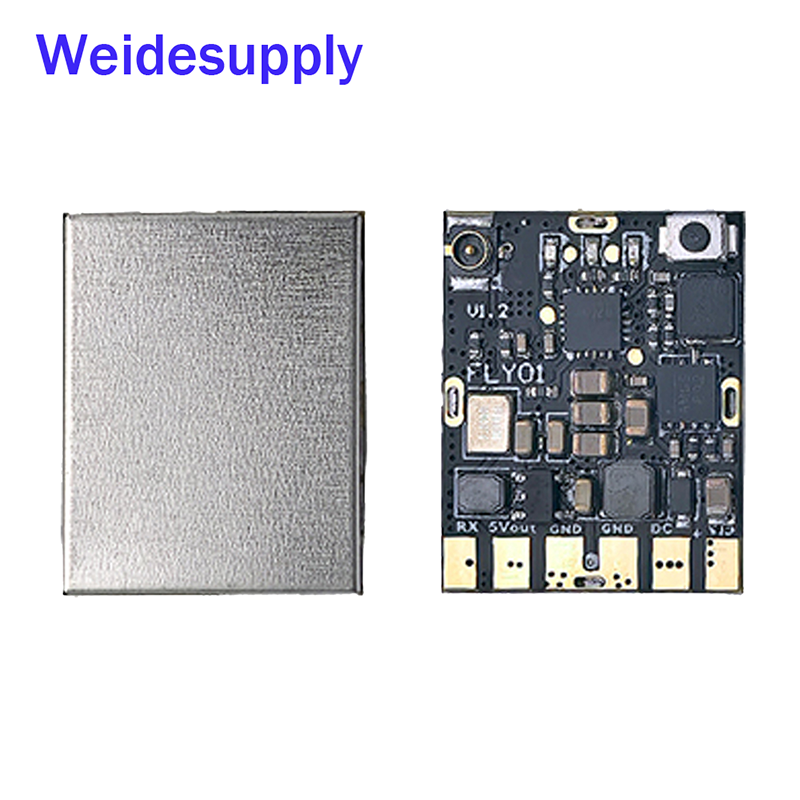
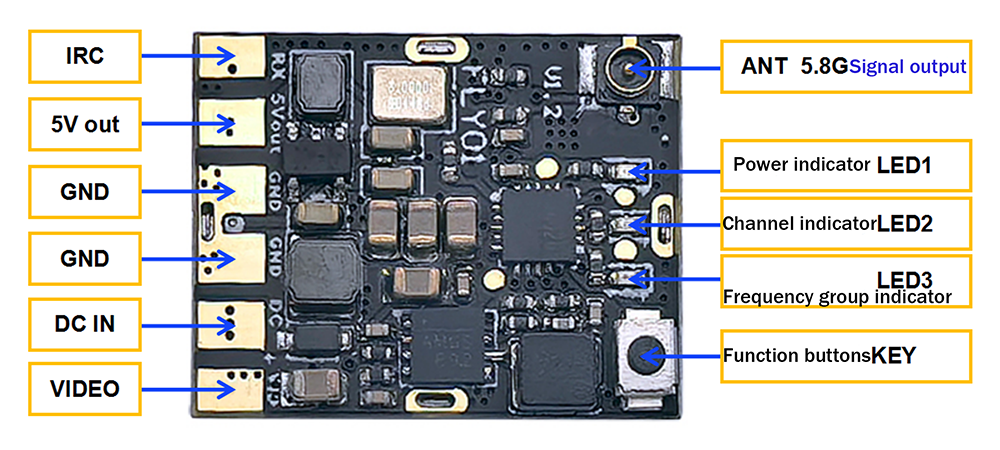
Pinout Diagram:
text
[ANT] [LED1] [LED2] [LED3] [KEY]
[IRC] [5V OUT] [GND] [GND] [DC IN] [VIDEO]
Interface Functions:
| Label | Function |
| ANT | 5.8GHz RF output (IPEX connector) |
| IRC | Serial control (IRC protocol) |
| 5V OUT | Regulated 5V±0.5V (500mA max) |
| GND | Power/Video ground (dual pins) |
| DC IN | Positive input (7-28V DC) |
| VIDEO | Composite video input (1Vp-p @75Ω) |
| KEY | Multi-function button |
LED Indicators:
LED1 (Green): Power status
LED2 (Blue): Channel indicator
LED3 (Red): Frequency band indicator
3. Operation Guide
Button Functions (KEY):
Enter Selection Mode:
Hold KEY >2s → LEDs blink once
Cycling order: Channel → Band → Power
Short Press Actions:
Channel Mode: Cycle CH1-CH8 (Blue LED blinks = channel #)
Band Mode: Cycle FR1-FR6 (Red LED blinks = band #)
Power Mode: Cycle 25mW→50mW→200mW→400mW→PIT (Green LED indicates)
Power LED States (Green):
| Indicator | Power Level |
| 1 Blink | 25mW |
| 2 Blinks | 50mW |
| 3 Blinks | 200mW |
| 4 Blinks | 400mW |
| OFF | PIT Mode |
Frequency Bands & Channels (MHz):
| FR | CH1 | CH2 | CH3 | CH4 | CH5 | CH6 | CH7 | CH8 |
| 1 | 5865 | 5845 | 5825 | 5805 | 5785 | 5765 | 5745 | 5725 |
| 2 | 5733 | 5752 | 5771 | 5790 | 5809 | 5828 | 5847 | 5866 |
| 3 | 5705 | 5685 | 5665 | 5645 | 5885 | 5905 | 5925 | 5945 |
| 4 | 5740 | 5760 | 5780 | 5800 | 5820 | 5840 | 5860 | 5880 |
| 5 | 5658 | 5695 | 5732 | 5769 | 5806 | 5843 | 5880 | 5917 |
| 6 | 5362 | 5399 | 5436 | 5473 | 5510 | 5547 | 5584 | 5621 |
4. OSD Configuration via IRC Protocol
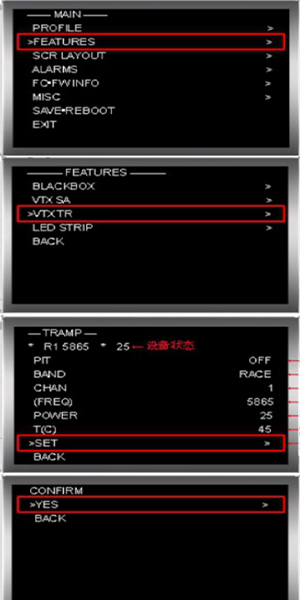
Power Level Mapping:
| OSD Value | Actual Power |
| 14 | 25mW |
| 17 | 50mW |
| 23 | 200mW |
| 26 | 400mW |
Setup Procedure:
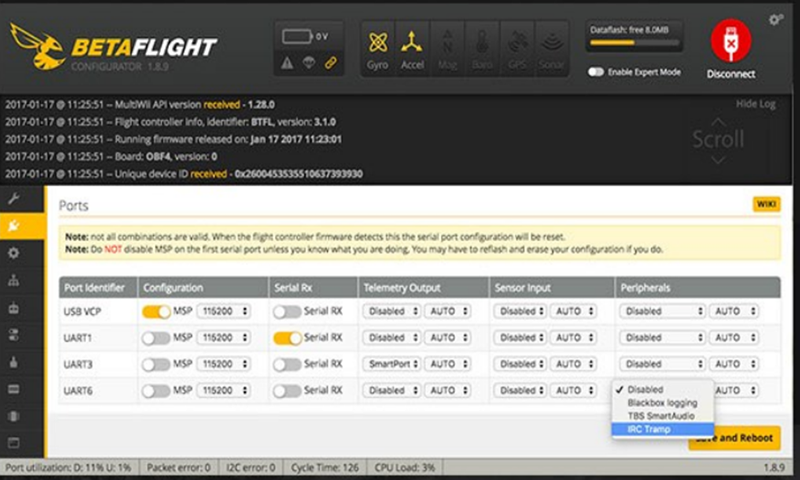
Hardware: Connect VTX IRC pin to FC UART TX
Software (Betaflight):
Ports Tab → Enable “IRC Tramp” on selected UART
5. Critical Usage Warnings
⚠️ THERMAL MANAGEMENT
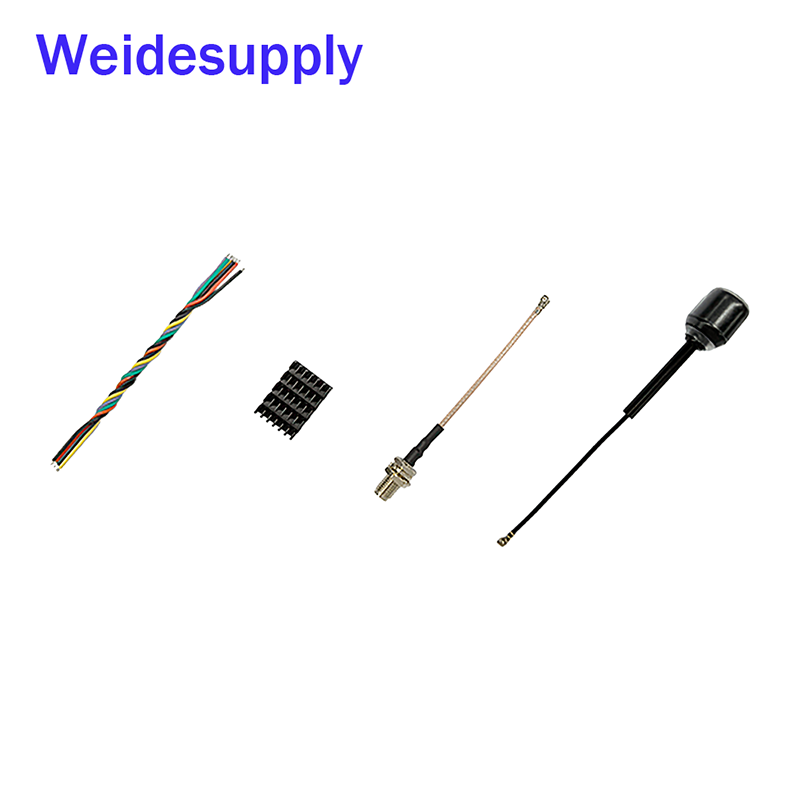
MANDATORY COOLING: Requires heatsink/fan/airflow at all power levels >25mW
INSTALLATION SPACE: Maintain 5mm clearance around module for ventilation
THERMAL THROTTLING:
100°C: Power drops 1 level every 5s (down to 25mW)
⚠️ ANTENNA & POWER SAFETY
ALWAYS CONNECT ANTENNA BEFORE POWER:
IPEX connectors must be fully seated
Risk: PA burnout if transmitting without antenna
VOLTAGE VERIFICATION:
Confirm polarity and voltage range (7-28V) before connecting
POWER LIMITATIONS:
At 5V input: Reduced maximum output power
⚠️ OPERATIONAL BEST PRACTICES
Match TX/RX frequencies using tables above
For racing events: Use 25mW/50mW bands to avoid interference
Periodically inspect IPEX connector integrity
Transformative VTX Technology: Answering “Is a Drone Worth It” for Modern Pilots
The fundamental question every potential aerial enthusiast faces – is a drone worth it – finds its most compelling answer in advanced video transmission technology. At the heart of this technological revolution lies the sophisticated VTX (video transmitter) systems that have transformed first-person view flying from a niche hobby into a professional-grade experience. The remarkable 5.8G 400mW 48CH VTX represents precisely why modern drone technology delivers unprecedented value, combining exceptional transmission power, extensive channel selection, and intelligent control protocols that collectively justify the investment in quality aerial equipment.
When evaluating is a drone worth it, one must consider the core components that define the flying experience. The VTX serves as the critical link between your aircraft and your perspective, determining the quality, reliability, and enjoyment of every flight. This advanced 5.8G 400mW VTX with 48 channels and IRC protocol support exemplifies why contemporary drone systems offer exceptional value, providing professional-grade performance that was previously inaccessible to all but the most well-funded enthusiasts. The technology embedded in this VTX system answers the question of worth through tangible benefits: crystal-clear video transmission, adaptable power settings, and reliable performance across diverse flying conditions.
Technical Excellence: Understanding the 5.8G 400mW 48CH VTX Specifications
The exceptional capabilities of this VTX begin with its sophisticated technical specifications that directly address the question of is a drone worth it through measurable performance metrics. Operating on the 5.8GHz frequency band, this VTX delivers optimal performance for FPV applications, balancing signal penetration, range capability, and interference resistance. The 400mW transmission power represents the sweet spot for most flying scenarios, providing substantial signal strength without excessive power consumption or thermal management challenges that often plague higher-output systems.
The 48-channel capability of this advanced VTX transforms the flying experience, offering unparalleled flexibility in frequency selection. This extensive channel availability, as documented in FPV industry standards, ensures that pilots can find clear spectrum even in crowded RF environments, minimizing interference and maximizing video quality. The VTX incorporates IRC protocol support, enabling seamless integration with popular flight controllers and providing convenient control over power settings, channel selection, and configuration parameters through your existing control systems. This level of technical sophistication directly addresses the question of is a drone worth it by delivering professional-grade capabilities in an accessible package.
Power Adjustable Features: Customizing Your Flying Experience
One of the most significant advantages of this advanced VTX system is its power adjustable capability, which adds substantial value to the overall drone ownership experience. The ability to fine-tune transmission power from 25mW to 400mW allows pilots to optimize their setup for specific flying scenarios, regulatory requirements, and battery conservation needs. This flexibility directly enhances the worth proposition of drone ownership, as a single VTX can adapt to diverse flying conditions rather than requiring multiple specialized units.
The power adjustment feature proves particularly valuable when considering is a drone worth it for pilots who operate in different environments. For racing events with multiple participants, lower power settings reduce interference while conserving battery life. For long-range exploration or aerial photography missions, maximum power ensures maintained signal quality at extended distances. The VTX intelligent thermal management system maintains optimal performance across all power settings, preventing overheating while ensuring consistent video quality. This adaptability, as noted in drone technology research , significantly enhances the value proposition of quality drone equipment.
IRC Protocol Integration: Intelligent Control and Convenience
The incorporation of IRC protocol support represents a crucial advancement that substantially contributes to answering is a drone worth it for serious enthusiasts. This intelligent control system enables seamless integration with popular flight controllers and OSD (On-Screen Display) systems, allowing pilots to adjust VTX settings without accessing the physical unit. The convenience of changing channels, power levels, and configuration parameters through existing control interfaces transforms the user experience, making sophisticated functionality accessible even during flight.
The IRC protocol implementation, as detailed in industry technical documentation , provides reliable communication between the VTX and control system, ensuring that setting changes occur instantly and reliably. This capability is particularly valuable when considering is a drone worth it for professional applications, where the ability to quickly adapt to changing conditions can mean the difference between successful mission completion and equipment failure. The protocol’s efficiency also minimizes additional wiring and complexity, contributing to cleaner builds and more reliable systems overall.
Wide Power Supply Compatibility: Versatility Across Platforms
The wide power supply compatibility of this advanced VTX system significantly enhances its value proposition when evaluating is a drone worth it. Supporting input voltages from 7V to 24V, the VTX can integrate seamlessly with various drone power systems, from small racing quadcopters to larger aerial photography platforms. This versatility means that a single VTX unit can serve across multiple aircraft, reducing the need for specialized equipment for different types of flying and making drone ownership more cost-effective.
The broad compatibility range, as tested in drone power system standards, ensures that the VTX maintains stable performance across different voltage inputs, providing consistent video quality regardless of battery charge level or system load. This reliability is crucial when considering is a drone worth it for serious applications, where equipment failure can result in lost footage, missed opportunities, or even aircraft loss. The VTX built-in voltage regulation and protection circuits safeguard against power spikes and reverse polarity, further enhancing the system’s durability and long-term value.
Competitive Simulation Applications: Training and Skill Development
For pilots wondering is a drone worth it for skill development and training purposes, this VTX offers exceptional capabilities for competitive simulation and practice. The 48-channel flexibility allows for realistic race day scenarios where multiple pilots must share limited spectrum, while the adjustable power settings enable practice under various interference conditions. The VTX consistent performance and low latency provide the responsive feedback necessary for developing precise flying skills and quick reflexes.
The simulation capabilities extend beyond racing to include aerial photography practice, where maintaining stable video transmission while executing complex maneuvers is crucial. The VTX reliable performance, as highlighted in aerial training guidelines , ensures that pilots can develop their skills with confidence that equipment performance won’t limit their progress. This training value significantly contributes to the overall worth calculation of is a drone worth it, as quality equipment accelerates skill development and enhances the overall learning experience.
Professional Applications: Justifying Investment Through Capability
When professionals evaluate is a drone worth it, they consider equipment capabilities that directly impact operational effectiveness and return on investment. This advanced VTX system delivers professional-grade performance features that justify its inclusion in commercial drone platforms. The 400mW transmission power provides reliable video links for inspection work, aerial photography, and surveillance applications, while the 48-channel flexibility ensures operation in diverse RF environments.
The VTX robust construction and reliable performance, as required by commercial drone standards, make it suitable for professional applications where equipment failure is not an option. The IRC protocol support enables integration with professional flight control systems, while the wide power supply compatibility ensures operation across various professional drone platforms. These capabilities collectively provide a compelling answer to is a drone worth it for commercial operators, where equipment reliability directly impacts operational success and business viability.
Regulatory Compliance: Operating Within Legal Frameworks
An essential consideration when determining is a drone worth it involves regulatory compliance and the ability to operate within legal frameworks. This VTX system facilitates compliant operation through its power adjustable features, allowing pilots to select appropriate transmission power levels for different jurisdictions and flying scenarios. The 48-channel capability ensures availability of legal frequencies, while the clean signal output minimizes harmonic emissions that could cause regulatory issues.
The VTX design incorporates features that support compliant operation, as outlined in FCC equipment guidelines, including stable frequency control and limited out-of-band emissions. This compliance focus is crucial when considering is a drone worth it for serious enthusiasts and professionals who must maintain legal operation to protect their investment and flying privileges. The ability to easily adjust settings for different regulatory requirements enhances the system’s value and versatility across various operating environments.
Conclusion: Defining Value in Modern FPV Technology
The question of is a drone worth it finds its most compelling answer in the sophisticated technology embodied by advanced systems like this 5.8G 400mW 48CH VTX. This video transmitter represents the culmination of years of technological development, delivering professional-grade performance, reliability, and versatility that significantly enhances the drone flying experience. The combination of adjustable power output, extensive channel selection, IRC protocol support, and wide power supply compatibility creates a system that adapts to diverse flying needs while maintaining exceptional performance.
For enthusiasts wondering is a drone worth it, this VTX technology provides the reliable, high-quality video transmission that transforms flying from a simple hobby into an immersive experience. For professionals evaluating is a drone worth it, the system delivers the performance and reliability necessary for commercial applications where equipment failure is not an option. The advanced features, robust construction, and adaptable performance characteristics collectively justify the investment in quality drone equipment, providing tangible benefits that enhance every aspect of the flying experience.
The evolution of VTX technology continues to push the boundaries of what’s possible in FPV flying, making drone ownership increasingly worthwhile for enthusiasts and professionals alike. As technology advances and capabilities expand, systems like this 5.8G 400mW 48CH VTX will continue to redefine the value proposition of drone ownership, making the answer to is a drone worth it an increasingly resounding yes for those seeking the best in aerial technology.
For more information on drone regulations and equipment standards, visit FAAs official drone information portal. To learn about FPV technology developments, explore FPV industry publications. For professional operator guidelines, consult Commercial Drone Alliance standards .